
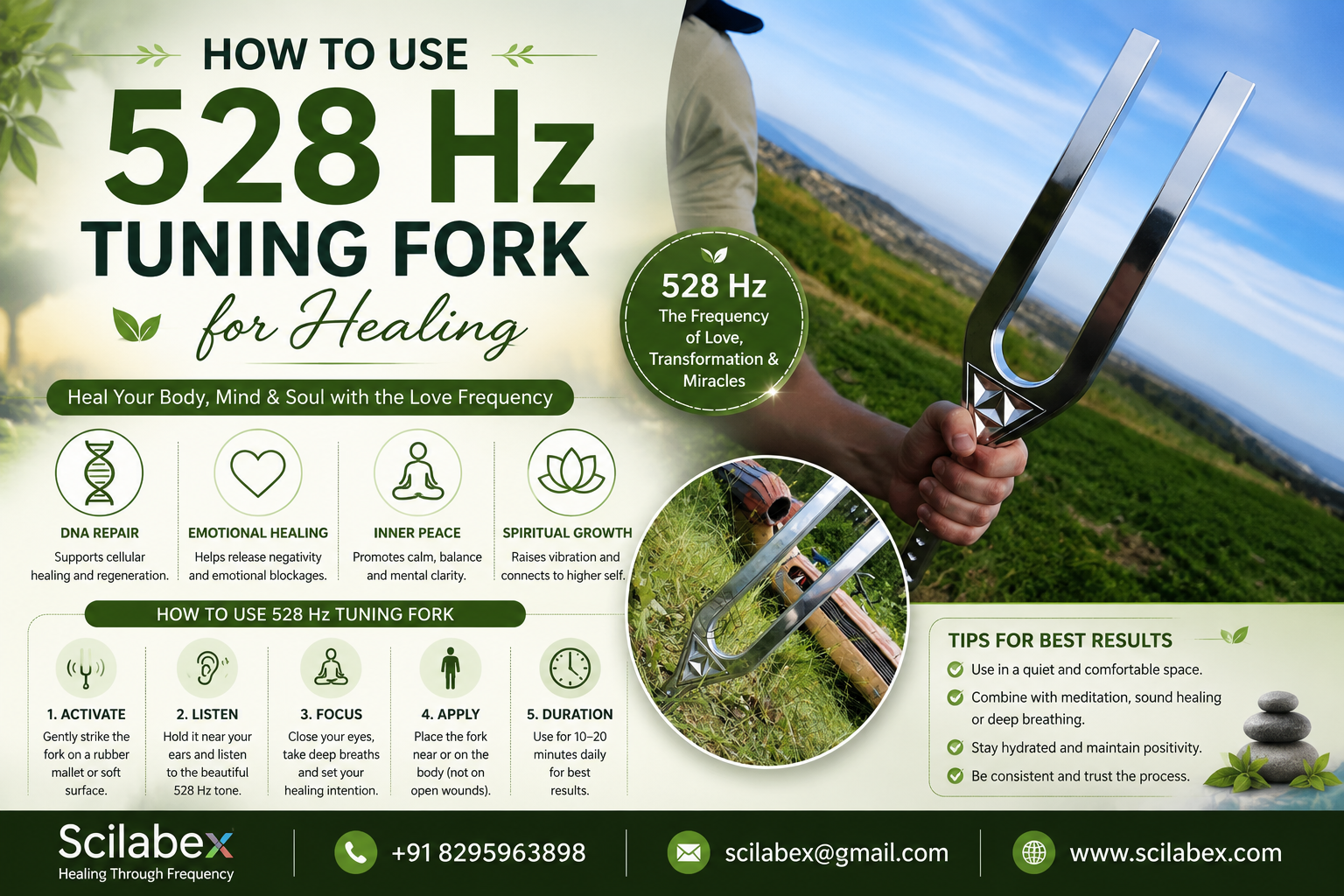
Among the many frequencies used in the world of sound therapy, one tone has captured more attention than almost any other: 528 Hz. Often called the "love frequency" or the "miracle tone" by sound healing practitioners, this particular pitch has found its way into meditation apps, wellness retreats, and the personal toolkits of countless energy workers. But beyond the buzzwords, there's a genuine, practical skill involved in using this frequency correctly — and that's exactly what this guide is about.
If you're wondering how to use 528 Hz tuning fork for healing after recently picking one up, or you're considering adding one to your self-care routine, this article walks you through everything you need to know: where the frequency comes from, the science and tradition behind it, and — most importantly — a clear, step-by-step method for using it safely and effectively as part of a healing or relaxation practice.
The 528 Hz tone belongs to a group of tones known as the Solfeggio frequencies, a set of six (later expanded to nine) tones that some researchers trace back to ancient sacred music, including Gregorian chants. Each tone in the set is associated with a different theme — cleansing, transformation, connection, and so on — and 528 Hz specifically has become associated with themes of repair, renewal, and emotional balance.
This frequency sits almost exactly between the musical notes C and C-sharp, which is part of why it doesn't naturally show up in standard Western musical tuning. That slightly "in-between" quality is part of its appeal in sound therapy circles — it's treated less as a musical note and more as a standalone therapeutic tool.
It's worth being transparent here: the specific healing claims attached to 528 Hz are rooted in the alternative wellness tradition rather than in mainstream clinical science. That doesn't make the practice meaningless — many people find real, subjective value in sound-based relaxation rituals — but it's helpful to approach it as a mindfulness and relaxation tool rather than a medical treatment.
What You'll Need Before You Begin
Using a 528 Hz tuning fork doesn't require much equipment, which is part of what makes this practice so accessible. Here's a simple checklist:
- A properly calibrated 528 Hz tuning fork
- An activator (a rubber mallet, rubber pad, or simply the heel of your palm)
- A quiet room where you won't be disturbed for 10–15 minutes
- Optionally, a comfortable mat, cushion, or chair to sit or lie down on
- A few minutes of unhurried time — this is not a practice to rush through
Because the entire practice depends on the fork producing an accurate, steady 528 Hz tone, the quality of the instrument itself matters far more than people initially expect. A poorly calibrated fork will drift from the intended pitch, undermining the very purpose of the exercise. This is one of the reasons practitioners increasingly look for tools manufactured with genuine attention to frequency accuracy, such as the sets produced by Scilabex, rather than generic, unlabelled forks of uncertain calibration.
Step-by-Step: How to Use 528 Hz Tuning Fork for Healing
Step 1: Prepare Your Space
Choose a calm environment — dim the lights if you can, silence your phone, and let the people around you know you'd like a few uninterrupted minutes. The goal is to create conditions where you can actually notice the sound and how your body responds to it, rather than treating it as background noise.
Step 2: Settle Your Body
Sit comfortably with your spine relatively straight, or lie down flat on your back if that feels more natural. Close your eyes if you're comfortable doing so, and take three or four slow, deliberate breaths. This isn't just a formality — a settled nervous system makes it much easier to actually perceive the subtle sensations of the practice that follows.
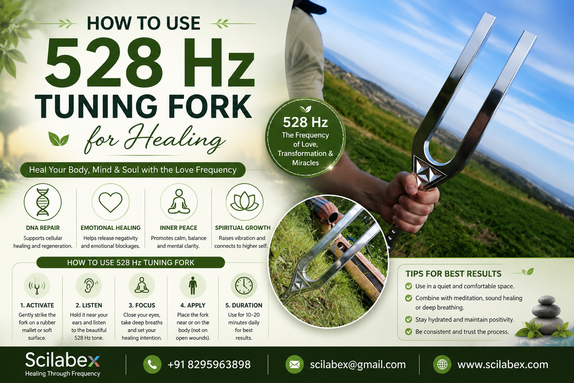
Step 3: Activate the Fork
Hold the tuning fork by its stem, not the tines, since touching the tines will dampen the vibration. Strike it firmly but gently against your activator — a rubber mallet or the fleshy base of your palm works well. Avoid striking it against hard surfaces like wood, tile, or metal, which can damage the tines and distort the tone.
Step 4: Bring It Close to the Body
Once activated, you can use the fork in two main ways:
Air-conduction method – Hold the fork a few inches away from your ear, moving it slowly around the head, or simply let the tone fill the room as you sit quietly and listen.
Contact method – Gently place the base of the vibrating fork against the skin, commonly at the centre of the chest, the collarbone, or the palm of the hand, allowing the vibration to be felt directly rather than just heard.
Many practitioners begin with the chest, since 528 Hz is most often associated with the heart space in sound healing tradition, though there's no strict rule — some people prefer working along the spine, the temples, or simply holding the fork near the crown of the head.
Step 5: Stay With the Sound
Once the fork is activated and positioned, simply stay still and present. Let the tone ring out naturally and fade on its own — don't strike it again immediately. Notice the sensation, whether that's the sound itself, a faint tingling where the fork touches the skin, or simply the stillness in the room as the tone fades.
Step 6: Repeat the Cycle
Most sessions involve striking and applying the fork three to five times in a row, allowing a short pause of quiet reflection between each strike. There's no strict rule for how many repetitions to use — many people find that three to five cycles is enough to notice a shift in how they feel, without dragging the session out too long.
Step 7: Close the Session Mindfully
After your final repetition, sit quietly for another minute or two before opening your eyes or moving. This closing pause allows the nervous system to settle before you transition back into your day, and many practitioners consider this quiet integration period just as important as the sound itself.
Different Ways to Incorporate 528 Hz Into Your Routine
Once you're comfortable with the basic method, there are several ways to build this practice into a broader wellness routine:
Morning grounding ritual – A short session first thing in the morning, before checking your phone, can be used as a calm, intentional way to start the day.
Pre-meditation warm-up – Many people use a few strikes of the fork right before sitting down to meditate, treating the tone as a signal that shifts the mind into a quieter state.
Evening wind-down – Using the fork in the last half hour before bed, paired with slow breathing, is a popular way to ease out of a busy day.
Paired with breathwork – Some practitioners strike the fork, then take one slow inhale and exhale for the duration the tone rings out, syncing the sound with the breath cycle.
During journaling or reflection – A short session before or after journaling can be used as a way to settle the mind before writing, or to close a reflective session on a calm note.
Alongside yoga or stretching – A few strikes of the fork before or after a gentle stretching sequence is a simple way to bookend a physical practice.
What People Commonly Report
As with all sound therapy work, individual experiences vary widely, and there's no guaranteed outcome. That said, people who use 528 Hz tuning forks regularly commonly describe:
- A sense of calm settling in within the first few minutes of a session
- An easier time quieting mental chatter compared to sitting in silence alone
- A pleasant, grounding physical sensation where the fork touches the skin
- A useful "reset" ritual during a stressful day
- Better ease of settling into sleep when used as part of an evening routine
- A simple, repeatable structure that makes meditation feel more approachable
As always, it's worth treating this as a complementary relaxation practice that sits alongside — rather than replaces — your regular self-care and wellness habits.
Common Mistakes to Avoid
If you're new to this practice, a few small adjustments can make a big difference in your experience:
Striking too hard. A firm tap is enough — overstriking doesn't make the tone "stronger," it just risks damaging the fork over time.
Touching the tines. Always hold the fork by the stem. Touching the prongs dampens the vibration almost instantly and mutes the tone.
Rushing through the session. The value of this practice comes largely from the stillness between strikes, not from repeatedly activating the fork in quick succession.
Using a poorly calibrated fork. If the fork isn't accurately tuned to 528 Hz, the entire premise of the practice is undermined. This is why sourcing your instrument from a manufacturer with a strong reputation for calibration accuracy, such as Scilabex, is worth the extra attention when you're building your set.
Skipping the settling period. Jumping straight from your session back into a busy task can undercut the calming effect you just spent several minutes building. Give yourself even sixty seconds of quiet before moving on.
Choosing a Well-Made 528 Hz Fork
Since the entire practice hinges on frequency accuracy, it's worth taking a moment when selecting your instrument. Look for:
- Clear labelling of the exact frequency, ideally with a stated calibration tolerance
- Solid, well-finished metal construction with no visible flaws in the tines
- A comfortable stem length and weight for extended handheld use
- A manufacturer that provides usage guidance alongside the product
Scilabex has built a name for itself in this space by focusing specifically on the accuracy and build quality of its sound therapy instruments, which makes it a practical starting point for anyone assembling a dependable 528 Hz fork for regular home use.
Frequently Asked Questions
How long should a session last? Most sessions run between five and fifteen minutes, including the settling period at the start and the quiet integration period at the end. There's no need to extend it further — consistency across regular short sessions tends to matter more than the length of any single session.
Can I use the fork directly on my skin every day? Yes, for most people a daily short session is perfectly reasonable as part of a self-care routine, much like a daily meditation or breathing practice.
Is there a wrong place on the body to use it? There's no strict rule, though most practitioners avoid the eyes, throat, and any area of broken or irritated skin and generally stick to the chest, palms, temples, or along the spine.
Do I need a full set of Solfeggio forks, or is 528 Hz enough on its own? A single 528 Hz fork is a perfectly complete starting point, and many people use it as a standalone practice for months before ever expanding into a broader set.
Can this replace other relaxation or wellness practices? It's best treated as a complementary addition to your existing routine — pairing well with meditation, breathwork, or a wind-down ritual — rather than a stand-alone replacement for them.
A Few Final Thoughts
Learning how to use a 528 Hz tuning fork for healing is less about technical skill and more about building a consistent, mindful ritual around a simple, repeatable sound. The mechanics are easy to learn in a single sitting; the real value comes from returning to the practice regularly, giving yourself a few quiet minutes to notice how the tone and the stillness around it make you feel. Start with a well-calibrated instrument, keep your early sessions short and unhurried, and let the practice grow naturally from there.
Leave a comment