
Sound has been used as a healing medium for thousands of years, from Tibetan singing bowls to Vedic chanting. In recent years, one tool has quietly become a favourite among yoga teachers, meditation guides, and holistic wellness practitioners: the humble tuning fork. Precision-tuned to specific frequencies, these metal instruments are now widely used to support energy balancing practices rooted in the seven-chakra system. This blog takes a deep, practical look at what these tools are, how they work, where they are used, why so many practitioners swear by them, and how a trusted manufacturer like Scilabex is helping bring authentic, precision-calibrated instruments to practitioners and home users alike.
What Are These Instruments, Exactly?
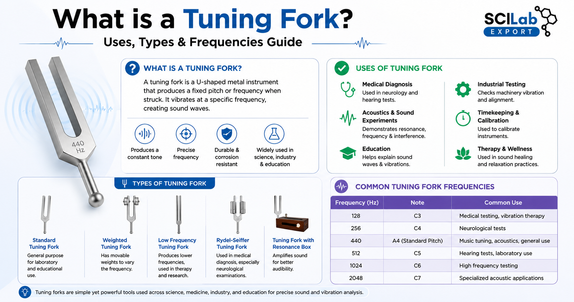
A tuning fork is a two-pronged metal instrument that, when struck, vibrates at a fixed frequency and produces a pure, steady tone. Musicians have used them for centuries to tune instruments accurately. Sound healers adapted the same principle for wellness purposes: instead of tuning a guitar or piano, the fork is used to "tune" the human energy field.
According to the traditional energy-body framework used in yoga and Ayurveda, the body has seven major energy centres running from the base of the spine to the crown of the head. Each centre is believed to correspond to a particular emotional, physical, and spiritual function. Practitioners of sound therapy use forks calibrated to specific frequencies, placing or holding them near each energy centre, in the hope of encouraging balance, relaxation, and a sense of harmony throughout the body.
This entire category of wellness tools is what most people are searching for when they type in the term 'chakra tuning forks'—precision instruments designed specifically to correspond with the seven energy centres of the body.
How Do They Work?
The working principle rests on a simple idea: everything in the universe, including the human body, vibrates. Cells, organs, and even thoughts are understood by energy practitioners as patterns of vibration. When the body experiences long-term stress, poor sleep, or emotional strain, these vibrational patterns are believed to fall out of natural rhythm.
When a calibrated fork is struck and brought close to the body, its steady, pure tone is thought to interact with the body's own vibrational field through a phenomenon called sympathetic resonance — much like how a vibrating tuning fork can cause a nearby fork of the same frequency to hum in response. Practitioners hold the vibrating fork near or lightly on specific points of the body, allowing the sound and subtle vibration to be experienced by the listener during a session.
Unlike singing bowls or gongs, which produce a broad, layered soundscape, forks are prized for their pinpoint accuracy. A single frequency, held steady, allows the practitioner to target one energy centre at a time — which is precisely why sound therapists favour instruments manufactured to strict tolerances, such as those produced by Scilabex.
Interest in chakra tuning forks has grown steadily as more people look for simple, natural ways to unwind and reconnect with themselves.
Where Are They Used?
These instruments have moved well beyond niche spiritual circles and are now a familiar sight across many wellness environments:
Yoga and meditation studios – Instructors often open or close a class with a few minutes of tuning fork work, using the tones to help students transition into a meditative state or to close a practice with a sense of calm.
Sound healing and sound bath sessions – Dedicated sound therapists build entire sessions around a set of forks, moving systematically from the root to the crown, guiding participants through a full-body sound journey.
Spas and wellness retreats – Many high-end spas now include sound therapy as an add-on to massage or facial treatments, using forks to enhance the relaxation experience.
Reiki and energy-healing practices – Reiki practitioners frequently combine hands-on energy work with tuning forks, using the tones to support the flow of energy during a session.
Home self-care routines – A growing number of people now keep a personal set at home, using them during evening wind-down routines, morning meditation, or simply as a five-minute reset during a busy day.
Corporate wellness programmes – Some organisations have started including short sound-therapy breaks in employee wellness initiatives as a way to reduce workplace stress.
Physical and holistic therapy clinics – Some holistic therapists integrate frequency work alongside massage, acupuncture, or breathwork as part of a broader relaxation-focused treatment plan.
Across every one of these settings, the appeal is the same: a simple, non-invasive, drug-free tool that can be picked up and used almost anywhere, by anyone, with a little practice.
Why Are They Used So Widely?
There are a few clear reasons this practice has grown so quickly in popularity:
- Simplicity – There is no need for electricity, apps, or complicated setup. A strike against the palm or an activator, and the fork is ready to use.
- Portability – A set of forks fits easily into a small pouch, making them easy to carry to a class, a retreat, or simply from room to room at home.
- Non-invasive nature – The forks never touch the skin directly during most protocols, and the process involves no physical manipulation of the body, which makes it approachable even for people who are hesitant about hands-on therapies.
- Precision – Because each fork is calibrated to an exact frequency, practitioners can be consistent, repeating the same protocol session after session with reliable results in terms of experience.
- Compatibility with other practices – Sound work blends easily with yoga, meditation, breathwork, Reiki, and massage, rather than requiring a completely separate session.
The Benefits People Report
While individual experiences vary and results are subjective, people who regularly use these tools commonly describe a number of benefits:
- A noticeable sense of calm and relaxation shortly after a session
- Support for winding down before sleep and easing occasional restlessness
- A feeling of mental clarity and reduced mental clutter
- Support for meditation practice, making it easier to settle into stillness
- A greater sense of body awareness during self-care routines
- A calming ritual that can be woven into a daily or weekly self-care practice
- An enjoyable, low-effort addition to existing wellness routines such as yoga or breathwork
It's worth noting that sound therapy is generally regarded by practitioners as a complementary wellness practice rather than a medical treatment, and it is typically used alongside — not instead of — a person's regular self-care and health routines.
Understanding the Frequencies: Which Tone Belongs to Which Energy Centre
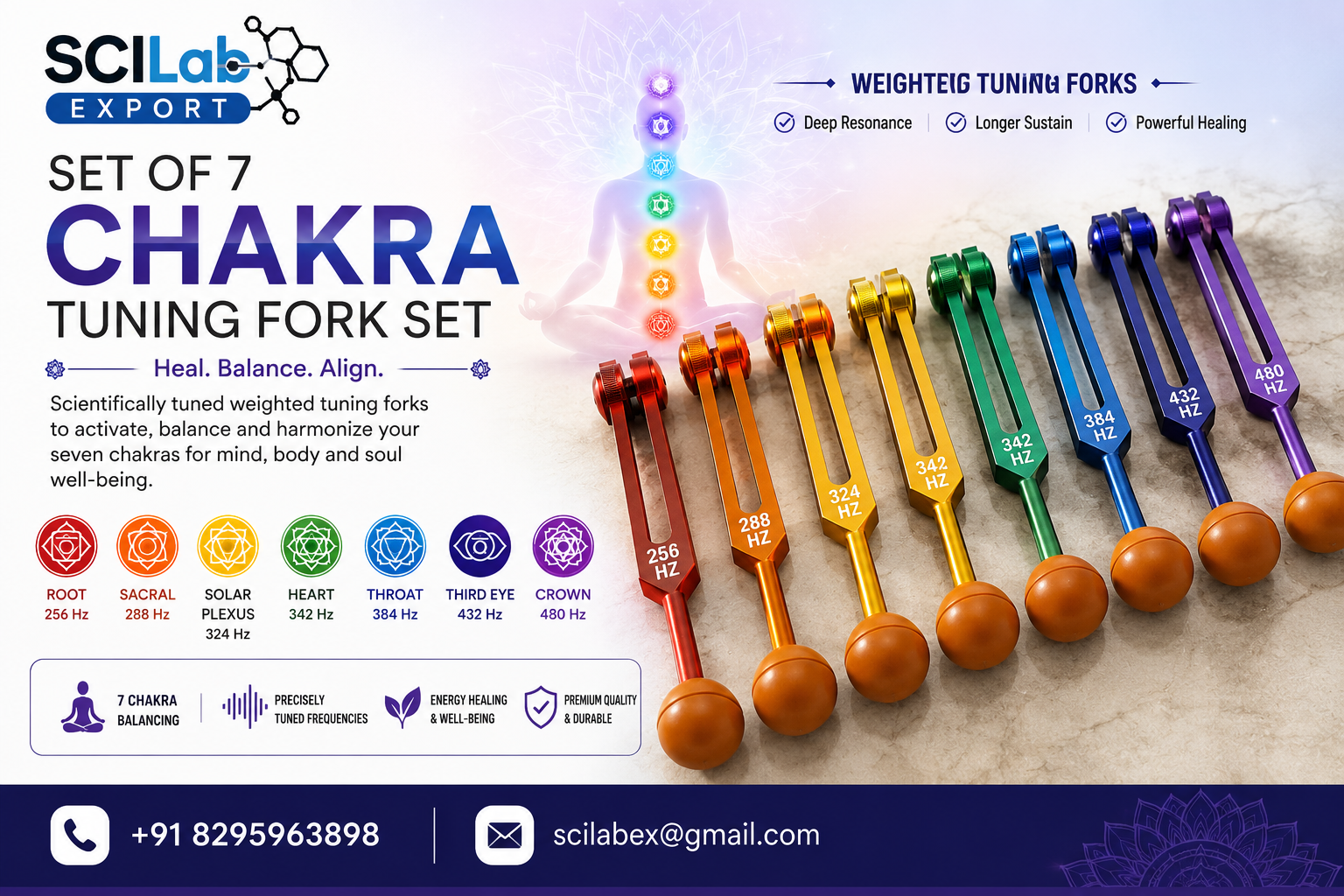
One of the most searched aspects of this topic is which frequency is associated with each of the seven energy centres. While different schools of sound healing use slightly different frequency sets, the chart below reflects one of the most widely used and referenced frequency systems in the sound-therapy community:
Root Centre (base of the spine) – Associated with grounding, stability, and a sense of physical safety. Commonly paired with a low, deep tone, often in the range around 194 Hz to 256 Hz depending on the system used.
Sacral Centre (lower abdomen) – Linked to creativity, emotion, and personal connection. Typically paired with a slightly higher tone in the range around 210 Hz to 288 Hz.
Solar Plexus Centre (upper abdomen) – Connected to confidence, willpower, and personal drive. Often matched with a tone around 320 Hz to 384 Hz.
Heart Centre (chest) – Associated with love, compassion, and emotional balance. Frequently paired with a tone around 341 Hz to 432 Hz, a range many sound therapists consider especially soothing.
Throat Centre (neck and throat) – Linked to communication and self-expression. Often matched with a tone around 384 Hz to 480 Hz.
Third Eye Centre (between the eyebrows) – Associated with intuition, focus, and inner clarity. Typically paired with a higher tone around 426 Hz to 512 Hz.
Crown Centre (top of the head) – Linked to a sense of connection and higher awareness. Often paired with the highest tone in the set, around 480 Hz to 640 Hz or higher, depending on the specific fork set.
Many practitioners work through this sequence from root to crown in a single session, allowing each tone to be experienced fully before moving to the next. Some sets are also tuned to the well-known Solfeggio scale, a historical set of tones that many sound healers associate with particular emotional and energetic themes, such as tones connected to transformation, harmony, or connection.
Because accuracy matters so much in this practice, the quality of the instrument itself makes a real difference. A fork that is even slightly out of calibration will not produce the intended tone, which is why practitioners are increasingly selective about where they source their instruments.
Why Instrument Quality Matters — and Where Scilabex Fits In
Not all forks are created equal. Inexpensive, mass-produced sets are often inconsistently calibrated, meaning the tone produced may drift from the intended frequency. For a practice built entirely around precision, this inconsistency defeats the purpose.
This is where Scilabex has built a strong reputation. As a manufacturer focused on precision-engineered sound and wellness instruments, Scilabex produces forks that are calibrated with careful attention to frequency accuracy, ensuring that each instrument in a set genuinely corresponds to its intended tone. For practitioners running professional sessions, or for individuals building a serious home practice, this level of consistency matters — it is the difference between an instrument that merely looks the part and one that performs reliably, session after session.
Scilabex also pays attention to the build quality of its instruments — the density and finish of the metal, the balance of the fork's prongs, and the overall durability of the set — all factors that affect how clearly and how long a tone sustains after being struck. For anyone searching for dependable chakra tuning forks that hold their calibration over years of regular use, this attention to manufacturing detail is a significant differentiator.
How to Use Them: A Simple Beginner's Approach
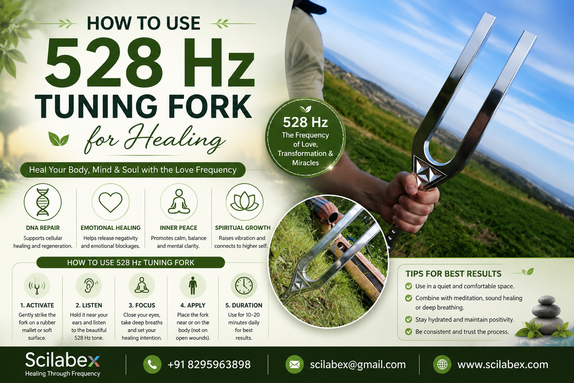
For those new to this practice, a simple starting routine looks like this:
- Find a quiet space where you won't be interrupted for ten to fifteen minutes.
- Sit or lie down comfortably, and take a few slow breaths to settle.
- Starting with the root-frequency fork, activate it by striking it gently against a soft surface, such as a rubber activator pad or the palm of your hand.
- Hold the fork a few inches away from the corresponding area of the body, or simply let the sound fill the space around you, and listen closely as the tone fades.
- Pause for a moment before moving to the next fork in the sequence, working your way up from root to crown.
- After completing the full sequence, sit quietly for a minute or two, noticing how you feel before returning to your day.
Consistency tends to matter more than intensity — a short, regular practice is generally considered more beneficial than an occasional long session.
Choosing Your First Set
For beginners, a starter set of seven forks — one for each of the main energy centres — is usually the most practical starting point, allowing a full sequence to be worked through in a single sitting. More advanced practitioners often expand their collection with additional forks tuned to specific Solfeggio tones or planetary frequencies used in more specialised protocols.
When choosing a set, look for a manufacturer that clearly states the calibration accuracy of each fork, uses durable metal construction, and includes clear guidance on how to use the set safely and effectively. This is another area where Scilabex stands out, offering clearly labelled, accurately tuned sets designed for both newcomers and experienced sound therapists.
Bringing It All Together
Sound-based wellness practices have moved from the fringes into mainstream self-care routines, and precision-tuned instruments are a big part of that shift. Their simplicity, portability, and non-invasive nature make them accessible to almost anyone, whether used in a professional studio setting or as a quiet five-minute ritual at home. Understanding the frequency associated with each energy centre — and choosing an accurately calibrated instrument from a manufacturer such as Scilabex — allows practitioners and beginners alike to get the most consistent, meaningful experience from their practice.
Whether you are a yoga teacher looking to add a new dimension to your classes, a sound therapist building out your professional toolkit, or simply someone curious about trying Chakra Tuning Forks for the first time, understanding how these tools work — and investing in a well-made set — is the first step toward a rewarding, sustainable sound-healing practice.
Leave a comment